
What a new state audit reveals about Point Nepean Road, and the questions the government still hasn’t answered
I ride a scooter on the Mornington Peninsula. Our roads are in poor condition, and many are poorly lit. I watch the road surface as carefully as I watch the traffic.
When you’re on two wheels, you look ahead, check your mirrors and keep an eye on the cars around you. You also have to watch the road itself. A pothole isn’t just an uncomfortable bump when you’re riding. By the time you see one, you may have very little room to avoid it safely.
I was so upset to read about the death of a motorcyclist near Ballarat on Sunday. Police are investigating what happened, but reports say his motorcycle struck a pothole. My thoughts are with his family and everyone who knew him. We shouldn’t presume the outcome of that investigation, but every rider will understand why this news is frightening.
Just days earlier, Victoria’s Auditor-General published a report on the maintenance of state-managed roads. It found that 48 per cent of the state road network was rated poor or very poor in 2024, up from 39 per cent in 2021. I looked up Point Nepean Road in the report’s road-by-road dashboard. Unsurprisingly, the result was worse than the statewide figure.
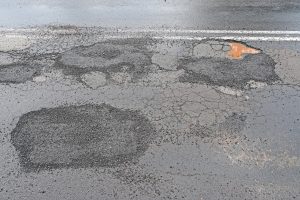
In 2021, about 46 per cent of Point Nepean Road was rated poor or very poor. By 2024, that had risen to more than 56 per cent, with nearly 40 per cent rated very poor. The dashboard measures remaining useful life, a gauge of the road’s structural condition. It doesn’t mean 56 per cent of Point Nepean Road is covered in potholes, or that every section is unsafe to use today. But it does show a road that keeps getting worse.
Point Nepean Road is a state-managed road, and I’m not the only one saying its condition is a problem. Mornington Peninsula Shire’s own advocacy to the state government lists Point Nepean Road among the state-managed roads it says need attention.
For those of us who use it to get to work, to the shops, to appointments or to visit friends and family, the audit figures are startling. And the latest data in the dashboard is from 2024. Anyone who drives or rides this road knows it’s only gotten worse since then. The audit found that funding has been insufficient to maintain or improve the state network, pushing maintenance towards reactive, safety-critical repairs instead of the work that stops roads failing in the first place.
The audit raises another question. Four companies hold maintenance contracts covering eight Victorian road maintenance regions. Point Nepean Road falls under the Metro South Central contract, which also covers Bayside, Boroondara, Frankston, Glen Eira, Greater Dandenong, Kingston, Monash, Stonnington and Whitehorse. That means our roads are competing for the same maintenance budget and the same crews as Brighton and Dandenong! The department sets the standards, priorities and funding. Contractors plan and schedule routine maintenance and submit monthly work programs for approval. Yet the Auditor-General found the department couldn’t show it systematically checked whether those programs matched its priorities. Only one of the four contractors had submitted its method for prioritising work for review. That’s not good enough.
I can’t tell you a contractor is putting Point Nepean Road behind a Dandenong intersection or a Brighton street. The audit doesn’t say that. But when one contract has to stretch from bayside suburbs to the far end of the Peninsula, it’s reasonable to ask how that spread, and the time and cost of getting crews all the way down here, affects what gets scheduled and what waits. If the government is approving a monthly program across all of it, it should be able to show us why one stretch of road gets repaired while another waits.
It should also be able to tell us whether repairs last. Of the routine maintenance works the department inspected between July 2024 and December 2025, about one in eight was assessed as defective and needing rework. The audit found the department had no process to track whether that rework met quality standards or happened on time. Filling a hole isn’t the end of the job if it opens up again. In my own experience riding our roads, a patched pothole lasts about two weeks before it’s back.
The government has announced extra pothole funding since the audit was completed. I welcome any repairs that make roads safer. But a target for the number of potholes filled can’t, on its own, tell us whether Point Nepean Road’s underlying condition is improving or whether the surface will just break down again.
The Auditor-General has given us a road-by-road view of condition. I’d like the government to respond to it: publish an up-to-date assessment of Point Nepean Road, say which sections will be resurfaced or rebuilt and when, and show what happens to the hazards residents report. Where a stretch of road keeps deteriorating and gets left waiting, I want to know why.
As the independent candidate for Nepean, I’m asking these questions because I use these roads too. People here shouldn’t have to guess who’s responsible, whether a hazard has been logged, or when a lasting repair is coming. The government is responsible for Point Nepean Road. It should be able to tell us what it’s doing to keep it safe.
Stay safe out there, everyone!
Sources: Victorian Auditor-General, Maintaining State Roads (9 September 2026); The Guardian, report on the Trawalla crash (14 September 2026);