
There are some things about the Mornington Peninsula that are easy to take for granted.
The open paddocks between townships. The bushland tucked behind suburban streets. The vineyards and market gardens. The wildlife corridors. The stretches of landscape where you can still look across a paddock or a stand of trees and feel a world away from Melbourne.
Together, these places form something much bigger than a collection of individual properties.
They are the Mornington Peninsula’s Green Wedge.
And what happens to the Green Wedge determines what kind of Peninsula we leave to the next generation.
So, what exactly is a Green Wedge?
In planning terms, green wedge land is non-urban land outside Melbourne’s Urban Growth Boundary. It is deliberately kept different from suburban development and is intended to protect agricultural, environmental, landscape, recreational and other non-urban values.
On the Mornington Peninsula, the Green Wedge covers around 70 per cent of the Shire’s land area. It supports agriculture and viticulture, tourism and recreation, biodiversity and conservation, as well as some of the landscapes that make the Peninsula distinctive.
It is also part of a much bigger system.
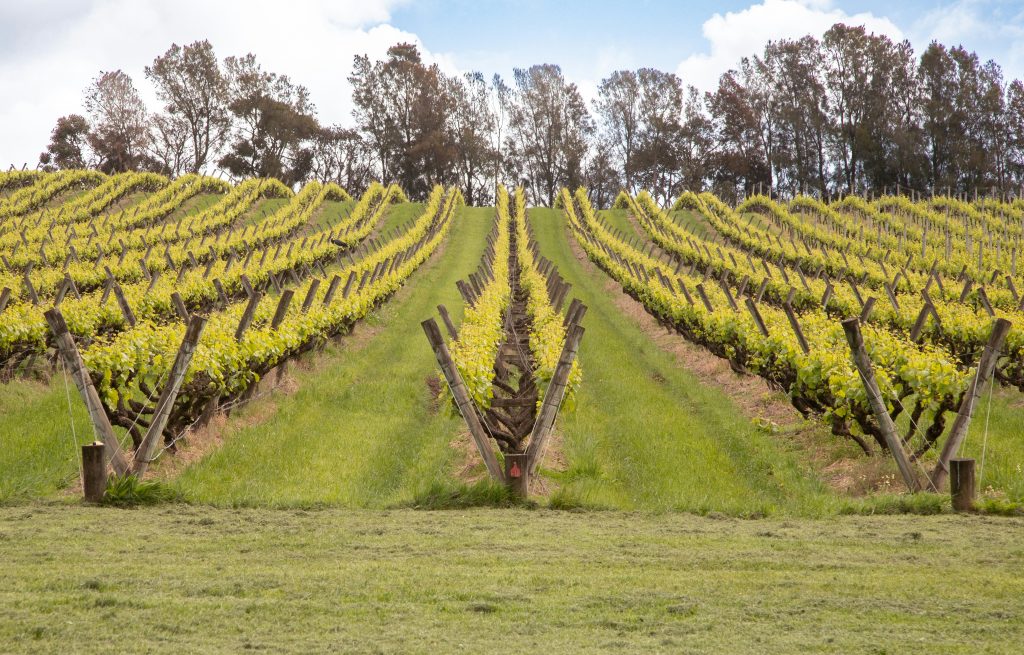
Victoria’s planning framework identifies the Mornington Peninsula as an important productive agricultural area within Melbourne’s green wedges. State planning policy also recognises the importance of protecting environmental, landscape and scenic values across green wedge areas.
So the Green Wedge isn’t simply “empty space”.
It’s working land.
It’s habitat.
It’s food production.
It’s a place for recreation and tourism.
And it is one of the reasons the Peninsula still feels like… well, the Peninsula.
So why does it matter?
The obvious answer is that people love it. But there is much more to it than aesthetics.
The Peninsula’s agricultural land contributes to Melbourne’s food supply. Its natural areas provide habitat and wildlife corridors. Its landscapes underpin tourism and recreation. Its vegetation, waterways and ecosystems provide environmental benefits that are difficult to replace once they are lost.
And the Peninsula’s natural environment isn’t just valuable in theory.
Our local environment faces ongoing pressures including vegetation clearing, environmental weeds and pest animals, climate change, altered fire and hydrological regimes, and increasing urbanisation and population pressures.
Once bushland is cleared or a wildlife corridor is broken up, putting it back together isn’t as simple as planting a few trees.
Some of these landscapes have developed over hundreds or thousands of years.
That’s why planning protection matters.
The Green Wedge is not a museum
Protecting the Green Wedge doesn’t mean freezing the Peninsula in time.
The Green Wedge contains farms, businesses, tourism, recreation and infrastructure. The challenge is making sure that these activities can coexist without gradually eroding the very values that make the area special.
That’s the balancing act.
The Mornington Peninsula Shire’s Green Wedge Management Plan recognises the need to manage the area carefully as Melbourne’s population grows. Ongoing pressures include development and subdivision, as well as the need to support agriculture and other appropriate economic activityEnevitably
The most important protection is arguably the Urban Growth Boundary.
The Green Wedge works in conjunction with planning controls that are intended to keep urban development concentrated within established urban areas rather than allowing suburban expansion to continually consume rural and natural landscapes.
That matters enormously for a place like the Mornington Peninsula.
We are close enough to Melbourne to feel the pressure of metropolitan growth, but geographically and environmentally different from the suburbs that surround Melbourne.
The question is not whether the Peninsula should change.
Inevitably, it will.
The question is how we manage that change without losing what makes the Peninsula worth protecting in the first place.
Four reserves that deserve protection
There is a practical example of this principle happening right now.
Mornington Peninsula Shire is consulting on a proposal to place permanent legal protection over four Shire-owned bushland reserves through conservation covenants:
🌿 Betty Clift Conservation Reserve, Rosebud
🌿 Lorna’s Triangle Bushland Reserve, Bittern
🌿 Peninsula Sands Bushland Reserve, Rosebud
🌿 Woods Bushland Reserve, Tuerong
A conservation covenant is a legal agreement that protects a property’s environmental values permanently. Importantly, the Shire says the proposed covenants would not change public access or the way these reserves are used today.
And these aren’t just four patches of bush.
Betty Clift contains Damp Sands Herb-rich Woodland, Austral Grass-trees, diverse wildflowers and a population of a nationally significant plant species.
Lorna’s Triangle contains large old trees providing habitat for hollow-dependent wildlife and is significant habitat for species including the Powerful Owl.
Peninsula Sands forms part of an important habitat corridor connecting remnant vegetation between Greens Bush National Park and Arthurs Seat State Park.
And Woods Bushland Reserve provides a large, connected area of Lowland Forest, Gully Woodland and Grassy Woodland. Powerful owls, koalas, sacred kingfishers, swamp wallabies and agile antechinus have been recorded there, while citizen scientists have recorded around 650 species of moths and butterflies.
These places are already loved by the community.
The proposed covenants would simply make their environmental protection permanent.
Community consultation is currently open until 25 September 2026.
You can find the Shire’s information and have your say here:
Conservation Covenants – Our Bushland. Our Legacy
What are we actually protecting?
When we talk about the Green Wedge, it can sound like we’re talking about a planning zone on a map.
We’re not.
We’re talking about the things that zone is there to protect.
The paddocks where food is grown.
The land that supports local farmers.
The bush where owls nest and wallabies move through.
The corridors that allow wildlife to move between larger reserves.
The landscapes that draw visitors to the Peninsula.
The places where families walk, ride, explore and reconnect with nature.
And the breathing space between our townships.
That’s why the Green Wedge matters.
And then there is the question of classification
The Peninsula’s relationship with metropolitan Melbourne is unusual.
Mornington Peninsula is currently classified as metropolitan Melbourne. The Shire has proposed creating a new “Peri-Regional” status that would recognise the Peninsula’s unique mix of metropolitan and regional characteristics, while retaining its Green Wedge planning protections and opening access to appropriate regional funding programs.
It’s important to be precise here: Peri-Regional is not currently an official Victorian Government classification. It is an advocacy proposal.
The idea is not simply to take the Peninsula out of Melbourne and declare it regional.
There are good reasons to be cautious about that approach.
The Green Wedge is fundamentally connected to Victoria’s metropolitan planning framework. Moving the Peninsula into a conventional regional classification could put some of the planning arrangements that protect the Green Wedge at risk.
At the same time, the Peninsula’s metropolitan classification can mean that local businesses, farmers, tourism operators and community organisations are excluded from programs that are available to genuinely regional areas.
That creates an unusual situation.
We can be metropolitan for the purposes of funding and taxation, while looking and functioning very differently from Melbourne’s built-up suburbs.
The Peri-Regional proposal is an attempt to address that mismatch.
The idea is to retain the planning protections that come with being part of metropolitan Melbourne, while opening access to regional programs where the Peninsula’s circumstances genuinely warrant it.
That could matter for everything from agricultural and tourism programs to business support, infrastructure grants and other regional initiatives.
But it is important not to overstate what would change.
A Peri-Regional designation would not automatically make every regional grant, subsidy or tax concession available to Peninsula businesses. Individual programs have their own eligibility rules and, in some cases, their own definitions of what constitutes regional.
Payroll tax is a good example.
Victoria has a significantly lower payroll tax rate for eligible regional employers than for metropolitan employers. But simply calling the Peninsula “Peri-Regional” would not automatically give every Peninsula business access to that lower rate. The relevant legislation and eligibility definitions would also need to recognise the Peninsula.
That’s why the question is bigger than simply changing a label.
It’s about whether government can create a framework that properly recognises the Peninsula’s unique circumstances.
Why not just become regional?
That’s a reasonable question.
The answer is that the Peninsula gets things from its metropolitan status as well.
We have access to metropolitan programs and infrastructure funding that aren’t necessarily available to regional councils. The Shire has, for example, received significant investment through metropolitan programs such as the Growing Suburbs Fund.
So a simple switch from metropolitan → regional could mean gaining access to some programs while losing access to others.
And there’s the Green Wedge.
The Peninsula has something that is incredibly difficult to recreate once it is lost: a metropolitan planning framework that deliberately protects a large proportion of the municipality from urban development.
That is why the Peri-Regional proposal is different.
It asks whether we really have to choose between the two.
Could we retain the Green Wedge protections and metropolitan programs that make sense for the Peninsula, while also gaining access to regional programs that reflect our agricultural, tourism, environmental and rural character?
That’s the policy question.
And it deserves a proper answer.
What are the threats to the Green Wedge?
The threats aren’t necessarily dramatic.
Often, they’re incremental.
- A subdivision here.
- A cleared block there.
- A new development that seems reasonable on its own.
- A wildlife corridor that becomes fragmented.
- Agricultural land that becomes increasingly difficult to farm.
- Environmental weeds spreading through bushland.
- Pressure from a growing population.
Each individual decision can seem small.
But collectively, those decisions can change the character of an entire landscape.
That’s why the Green Wedge needs active stewardship, not just a line on a planning map.
- Planning controls matter.
- Landowners matter.
- Farmers matter.
- Council matters.
- State Government matters.
- And the community matters.
Permanent protection of important bushland reserves is one part of that broader responsibility.
A legacy, not an accident
The Mornington Peninsula we know today didn’t happen by accident.
Its villages, farms, bushland, coastline and open landscapes have been shaped over generations.
Our job isn’t to prevent the Peninsula from changing.
It’s to make sure that change doesn’t slowly remove the things that make this place unique.
Permanent protection for four much-loved bushland reserves is one small but meaningful step in that direction.
And perhaps that’s how we should think about the Green Wedge more broadly.
Not as land waiting for its next use.
But as something that already has enormous value.
Something that feeds us, shelters wildlife, supports local jobs and businesses, gives us places to breathe, and makes the Mornington Peninsula what it is.
Some things are worth protecting simply because, once they’re gone, we can’t get them back.
The Green Wedge is one of them.